
Colonel Anil Athale (retd) recalls how the Battle of Panipat, 258 years ago, changed the history of India for the next century and half.

'Until India fully absorbs the fundamentals of international relations, it will continue to get evil for good,' says Brahma Chellaney.
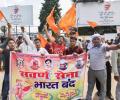
'It was the Supreme Court's order (recommending changes in the SC/ST Act).' 'Isn't it wrong not to accept even the court's order?' 'Are you bigger than every institution?'

The Indo-US defence relationship may now get personal attention with strong India-backer Ashton Carter today being nominated by President Barack Obama for the key post of the defence secretary.

The AAP leader, who has been recently in the news for supposedly dropping her second name, has been active in reforming the education and health sector.
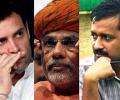
If Narendra Modi could tame his obsession with the Congress and the Nehru-Gandhi family, Arvind Kejriwal resist polishing his halo and Rahul Gandhi find his voice, we could begin a debate about the future of this country that actually addressed the seriousness of its problems, says Rahul Jacob.
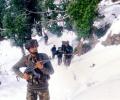
The army of the future needs a system of transparency and research. An open sociology of the army is a democratic necessity. An openness of information is a necessity of the army of the future fighting the next peace and next war on behalf of society, says social scientist Shiv Visvanathan.
Though growth in China is unlikely to slow down soon, India should prepare to take advantage of a shifting of gears there.

'If you look at the entire protest on April 2, you will find it was not only about the Atrocities Act dilution, but the accumulated anger of the Dalit community against the BJP over the last four years.'

The initiative would provide double the relief announced by the states of UP and Maharashtra, the Punjab CM said.

Modi said sometimes the government has to take certain decisions and hence it took some strong steps.

Yechury has dropped enough hints that a fight is in the offing at the Hyderabad conclave in April, where any member may move an amendment to the draft on the party's electoral line. Archis Mohan reports.

Indian farming was transformed after the mid-60s.

There are certain key points that one must know when while applying for education loans
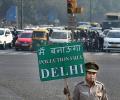
Friday will be the first day of the second phase of the odd-even scheme in New Delhi.

In his attempt to revive a beleaguered Congress, Rahul Gandhi is trying to bring in new leadership in the form of Rajeev Gowda and BK Hari Prasad, whose names have been nominated for the Rajya Sabha, says Renu Mittal.
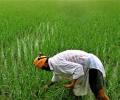
When he is not using the solar pump on his field for irrigation, Raman Parmar uses it to evacuate power to utility grid

'Growth is predicated on the misery of large sections of people.' 'Maybe Hindutva will be used to suppress any such unrest.'

Here's the full text of President's address with a word cloud.

UPSC toppers -- Ira Singhal, Nidhi Gupta, Vandana Rao and Suharsha Bhagat -- tell Rediff.com how they cracked the tough national exam.
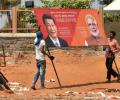
'Since the bilateral deficit is a reality -- and a worry -- we need to find a way to deal with it,' says Ravi Bhoothalingam.

While Indian IT has known what is coming and has a strategy ready to combat it, the same can't be said about the country and the government.

Mehbooba Mufti is running an alliance that is unnatural -- and one she instinctively militates against. She needs to be responsible in what she says and does -- and her time starts now, says Aditi Phadnis.

Uttar Pradesh still remains far behind the Indian average on most health indicators, says Dipa Sinha.
A survey conducted by Business Standard reveals that a majority of the country's states are still firmly against the move, while a few are open to considering only conditionally.

For an institution looking to revive past glory, the Nalanda University's initial days have been far from glorious.

China on Monday evaded queries on its role in the departure of ex-Central Investigation Agency operative Edward Snowden from Hong Kong even as it asked United States to explain the whistleblower's revelations of American cyber attacks on Chinese institutions.

New Delhi can strengthen its leverage by having better relations with the two than they have with each other.

In most cases, the payback on energy saving projects offered by GIBSS are between one and three years.

The $10.5 billion arms and equipment deal helped to arrest the recent drift in the 'special and privileged' strategic partnership, observes Brigadier Gurmeet Kanwal (retd).
'According to the government's Economic Survey, the Indian state's generosity is not restricted to its poorest citizens. In fact, in many cases, the beneficiaries are disproportionately the well-off.'

The elements are all aligned to make India a global powerhouse, says IMF Managing Director Christine Lagarde.

Are we adopting an idea whose time has come and gone? My feeling is, yes, says ex-banker C Joseph Chacko in the fourth article of the series on inflation targeting.

'We are rolling out a vaccine when we don't even have the phase 2 trial results; forget about phase 3 trial results.' 'Why are we playing with people's lives?'

These start-ups are different from the ones that have made it big in India.
'India and China have to make concrete progress with regard to the border issue, addressing the trade deficit, and facilitating people-to-people interactions. This has to happen in the next two, three years.' China expert Tansen Sen tells Sheela Bhatt/Rediff.com how India and China can take their relations to the next level.

India should enhance its economic, cultural and defence ties with Mongolia. It is high time Modi should focus on gaining clout in smaller Asian countries such as Mongolia. It is in this context, India's engagement with Mongolia would give much-needed impetus to India's foreign policy, says Sana Hashmi.

Government looking at cushioning slowdown due to demonetisation with sops and higher outlay for micro, small and medium enterprises, agriculture, and affordable housing.

The Congress vice-president's office and staff have been revamped after the party's electoral defeat in 2014
The State is trying to curb the students movements, therefore, there are suspicions against some of the Subramanian report on education's recommendations, says Mohammad Sajjad.
